

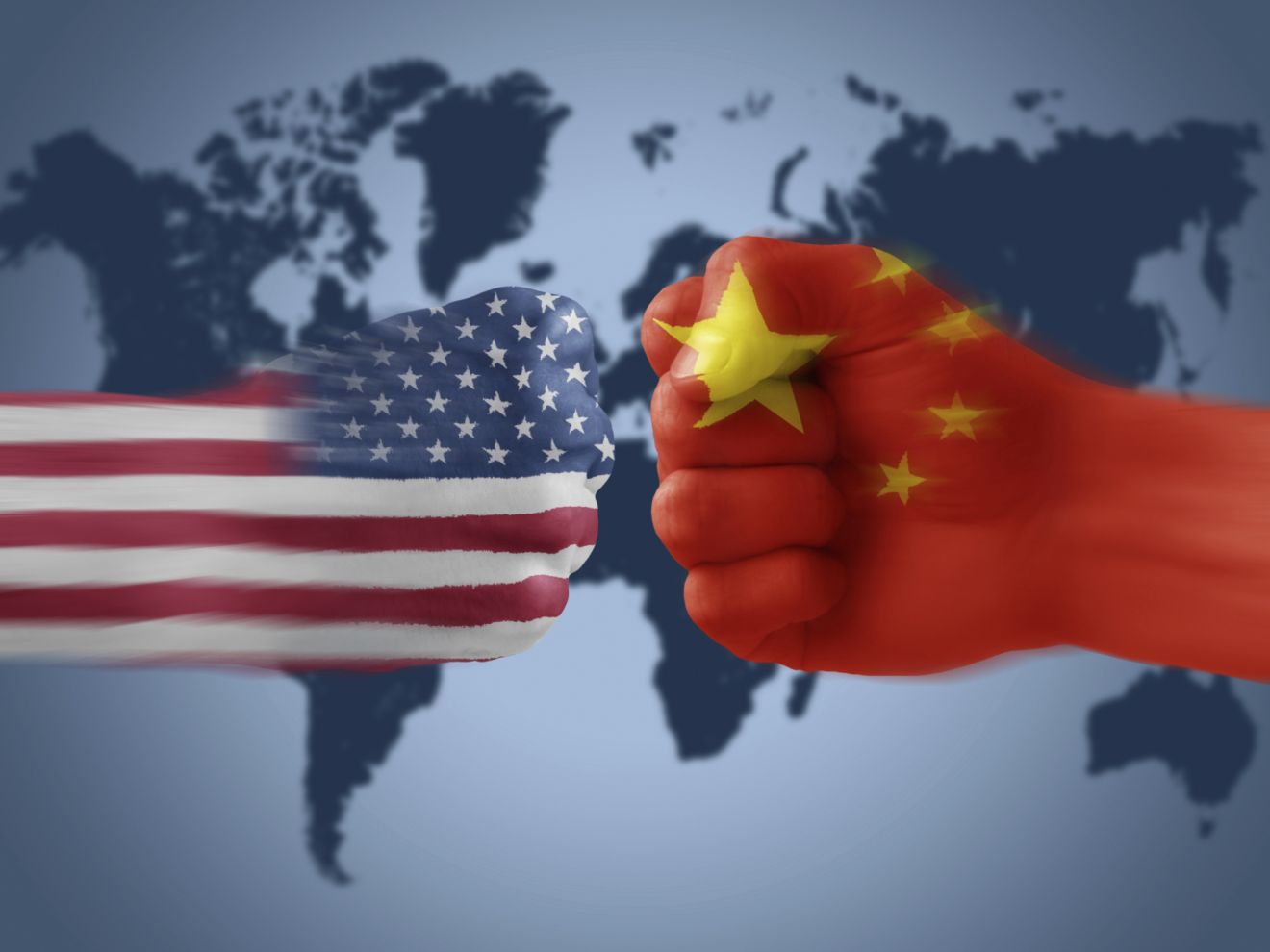
Can China supplant the U.S. as the world’s leading power without military conflict?
“It’s a remarkable visit in many ways: he’s not visiting China, but his entire trip appears to be about China,” said Paul Evans of The University of British Columbia about U.S. President Barack Obama’s four-nation tour of Asia in April. “That’s a portrait of the moment we’re in: What China is doing, what Chinese leaders are thinking, the roles they are trying to play – it’s on everybody’s mind.”
Evans made those remarks at the recent Ngee Ann Kongsi Annual Lecture Series event, “China’s Rise and Regional Responses: Conflict Ahead?” which took place just days before a World Bank report projected China overtaking the U.S. as the world’s largest economy in 2014. That attention-grabbing finding in the report by the International Comparison Program – which is part of the World Bank – is based on projections after taking into consideration Purchasing Power Parity (PPP), which the OECD defines as:
“…the rates of currency conversion that equalise the purchasing power of different currencies by eliminating the differences in price levels between countries.”
If both economies were measured using current exchange rates, the U.S. economy would still be twice as large as China’s.
Avoiding the “Thucydides trap”
While the mathematics is subject to debate, there is little dispute over China’s eventual ascension to the top of the global economic mountain. But as China overtakes the U.S., can the rising power overtake the ruling power without conflict? In other words, can it avoid what Harvard University’s Graham Ellison coined the “Thucydides trap”: “What made war inevitable was the growth of Athenian power and the fear which this caused in Sparta”? Replace “Athenian” with “Chinese”, and “Sparta” with “the United States”, and we have the latest reincarnation of what Greek historian Thucydides wrote about.
“The danger of inevitability theories is that it takes out of the picture the prospects of good diplomacy and smart adjustments on both sides,” Evans warns, referring to pessimists who point to Ellison’s research which found that in 11 of 15 cases since 1500 where a “rising power emerged to challenge a ruling power, war occurred”. Those 15 cases included World Wars I (1914-1918) and II (1939-1945), but Evans says the conditions then were different from current ones.
"Economic interdependence, even economic integration, is not a guarantee of peace."
- Tommy Koh
“The distinguishing feature of contemporary Asia that is different from Europe in 1914 or 1939 is not just the exchange of goods across borders – it was pretty high in those periods too – but it is now integrated production. The consequences of war, because of deep economic integration in Asia, and with the United States across Asia and Europe, would be staggering.”
From China’s membership in the World Trade Organisation (WTO) to the massive trade ties – China and the U.S. are each other’s second largest trading partner after the European Union and Canada respectively – it is difficult to overstate the economic interconnectedness between the two countries and, indeed, the modern globalised world. However, that is no guarantee for peace.
“2014 is not the same as 1914, but there is one lesson to be learnt: economic interdependence, even economic integration, is not a guarantee of peace,” cautions Tommy Koh, ambassador-at-large at Singapore’s Ministry of Foreign Affairs.
Regional tensions
Koh highlighted the recent flaring of regional tensions in the Asia-Pacific region – maritime disputes in the South China Sea and historical animosity in Northeast Asia between China, Japan, and the Koreas – and resurgent nationalism as a threat to regional stability.
“Even though China is Japan’s largest trading partner and Japan is one of the largest investors in China, they are no guarantees of peace,” says Koh. “The guarantee of peace here is the existence of the U.S.-Japan security alliance. The Chinese know that war with Japan will bring the United States into the conflict, and since China must avoid war with the United States, it follows that China must avoid war with Japan.”
U.S. president Barack Obama’s pronouncement of commitment to security in Asia Pacific, highlighted by his statement that the disputed Japanese-controlled Senkaku islands – Diaoyu islands to the Chinese – is covered under Article 5 of the Treaty of Mutual Cooperation and Security between Japan and the United States, might be reassuring to those worried about regional security. But given the less-than-forceful American reaction to Russia’s annexing of Crimea, how confident are American allies that Uncle Sam will indeed come to their defence? After all, the U.S. promised to protect – ironically with Russia – Ukraine’s security in exchange for the latter to give up its nuclear weapons following the collapse of the Soviet Union.
The rule of law
“It’s about international law,” Evans explains, citing Canadian Prime Minister, Stephen Harper. “The implication that that has in Asia is dramatic. One of the most forceful statements that Japan has been making is that China does not respect international law in the context of the maritime disputes.”
“Therefore, the Ukraine can be seen as opening up a whole new question about what are the rules of international law,” Evans says. “Mr. Harper is ready to put in significant sanctions but others are of the opinion: ‘Punish the behaviour, but don’t assume that a new Cold War with the Russians is the way to solve this issue because we fear that the implications of that would be a Cold War against China as well if international laws are to be upheld.’”
Regardless of how the Ukraine situation is resolved, the final question remains: Can the U.S. and China avoid falling into the Thucydides trap?
“I think both President Obama and President and Xi Jinping are aware of the burden of history,” says Koh. “China is unlikely to engage the U.S. in war for the next 10-15 years because the U.S. is still way too strong.”
Beyond that, one must hope for wise leadership to prevail.
Follow us on Twitter (@sgsmuperspectiv) or like us on Facebook (https://www.facebook.com/PerspectivesAtSMU)