

As the Asian gold market develops, so do prospects of a career in the gold industry
When the first Singapore Kilobar Gold Contract (hereinafter referred to as “kilobar contract”) was traded on October 13 at the Singapore Exchange (SGX), it was further proof that the global gold market has shifted eastwards. According to Thomson Reuters and precious metals consultancy GFMS, China and India account for 51 percent of demand for gold in 2013. The rest of Asia adds another 22 percent to that figure, making Asia the place to be for the gold trade.
However, London is still the world centre for gold, where the London Bullion Market has called the shots since the 18th century.
“All central bankers put their gold there, where there is about 4,000 to 5,000 tons of gold,” explains Albert Cheng, Far East Managing Director of the World Gold Council. “If you want the gold to be monetised, or if you want to trade it, it must be done with physical delivery unlike other financial instruments. For gold, it is done in London, so if your gold is in London you can deliver it immediately.
“That’s how it started but in the last 10 years, the centre of the gold universe has started to shift eastwards (where consumer demand is strong). From the industrial sized 400-ounce gold bar, it has to be changed to consumer-sized 1kg bars. There is no market for the kilobar, and that’s how the concept of the Singapore kilobar gold hub started.”
A golden career opportunity
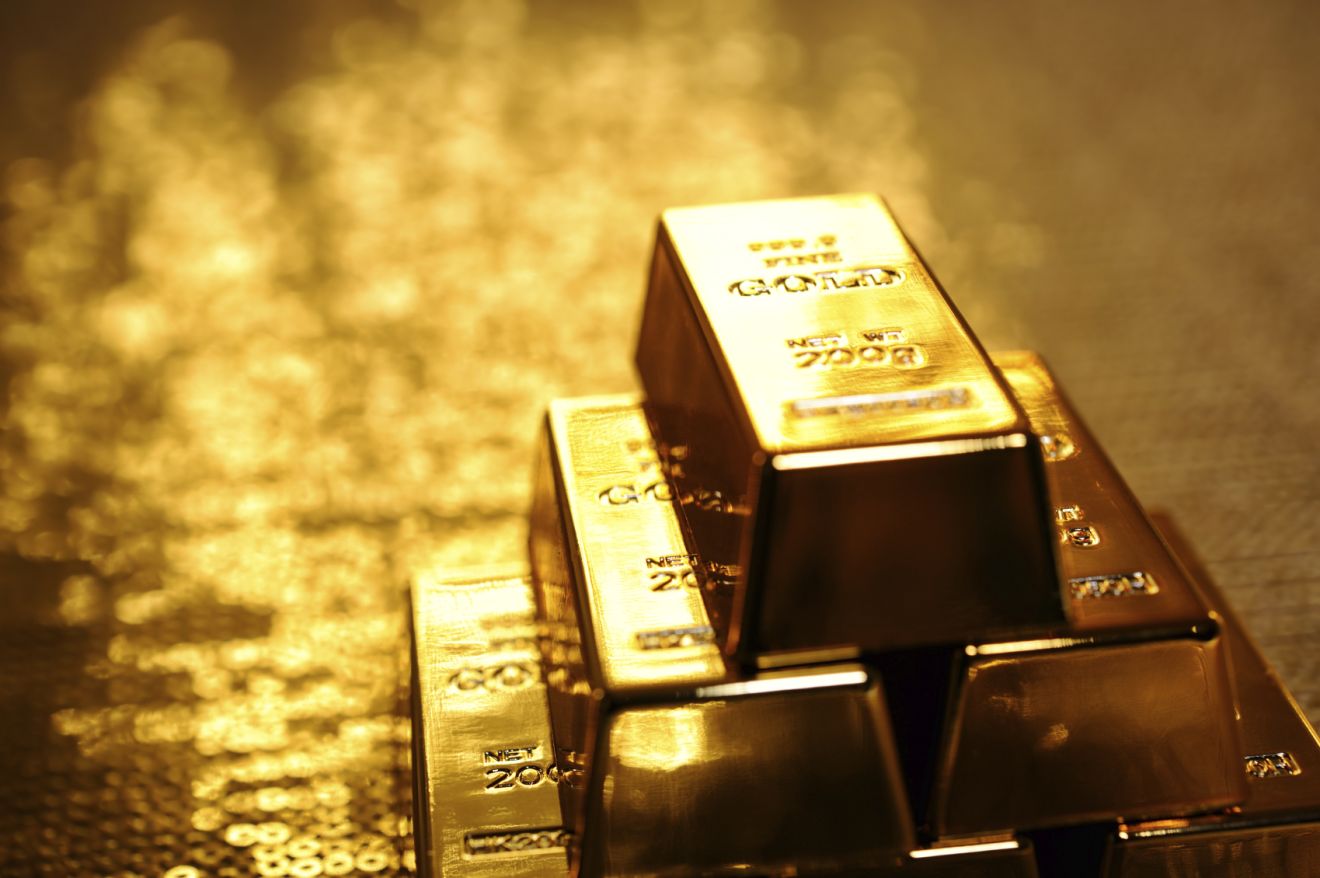
The kilobar contract is a 25kg contract i.e. 25 one-kilogram bars, which goes for hundreds of thousands of US dollars. As Cheng explains, “It is not a consumer contract. It’s targeted at the wholesale market in the region. We are talking to about 100 wholesalers to buy and sell here.
“The challenge now is to attract central banks to put their gold here in kilobars. How can we do that? Our contracts must be liquid. They have to know that, ‘If I put gold here, there must be a ready market to buy it at anytime that I want to liquidate.’ There are still plenty of things to do about the gold hub.”
In an SMU International Trading Institute seminar, “Singapore as a Gold Trading Hub: Career & Investment Opportunities”, industry insiders explained how jobs will be created as the SGX and various banks ramp up their capabilities to handle the gold trade.
“You have to get the rock out of the ground, crush it into powder form, and extract the gold with chemicals. It’s a labour-intensive process. No matter how much labour you put in, there is only so much gold you can produce.”
“It’s easily 40 to 50 people just to run the precious metals operations,” says Ng Cheng Thye, Head of Precious Metals Global Markets, Asia at Standard Bank. “Recently we launched the SGX Futures contract, and we needed to produce summary pages to tell SGX how we will do hedging, how we will cover our risks, and how the physical gold will be handled by our logistics partners etc. There are lots of career opportunities.”
Ng, who is also the President of the Singapore Bullion Market Association (SBMA), explains that the increased demand for gold professionals and the dearth of fresh talent over the past decade is likely to open up many avenues for advancement for new recruits. There will be openings for glamour jobs such as traders, but the 36-year industry veteran has a word of warning for wide-eyed rookies thinking about making big money as a gold trader.
“My first 15 years’ experience at a bank was as a trader. I worked 12 years as a night trader, and I’ve handled the futures market since 1980. My worst experience was in 1980 when gold prices dropped by US$250. I had to work 24 hours a day. Life as a trader isn’t so easy or sweet.”
Trading places
Loh Mun Chun, a trader at Commerzbank, elaborates on what traders really do, which is much more than “buy low, sell high”.
“In the world of trading, everything is pretty much screen-based, and a lot is algorithm based. It’s all analytics. Prices, open, high-low, close, volume – these are all data points, and you need tools to make sense of all this.
“If I’m hiring someone, and I come across someone who’s good with Excel spreadsheets, I would be very interested because he can run data analyses. I don’t need a gunslinger who can buy and sell – anyone can do that. If you can see through all my data and see something that I cannot see, you have value to me.”
Loh, who wanted to be a Forex trader when he left school over 20 years ago, described how most of his peers who became Forex traders have long since quit. “I wanted to be a Forex trader but it was difficult to find such a job at that time. My boss then told me, ‘If you are a trader, you only know how to buy and sell, nothing more. If you learn the physical side of the business, you will learn how to run the business.’
“It’s true because you learn about logistics, risk management, sales etc. At this stage of my career, because I understand the physical side of the business, I can handle the changing landscape much better.”
SMU Associate Professor of Finance Annie Koh, who moderated a panel discussion of the industry veterans, shares her personal experience: “I was a Forex trader. The shelf life of a Forex trader is about three to five years, and with the automated trading we have today, Forex traders have been eliminated.
“The conversation you are hearing is this: It’s all about building a business, running a business, and acquiring deep knowledge of the business that you would not get unless you are engaged in it.”
Gold-digging: A difficult job
Acquiring a deep knowledge of the gold business is precisely what Albert Cheng of the World Gold Council has done in nearly three decades in the industry. To really understand the gold business, one needs to understand how gold comes from the ground and ends up in a consumer’s hands. In the modern age, it usually involves going three kilometres into the ground.
“Surface gold, or alluvial gold, no longer exists,” Cheng says. “All the gold now is underground. The mines in South Africa are three kilometers deep. The lifts take five to six minutes to reach the bottom – I’ve taken one down before. The worker has to repeatedly drill holes into the walls, stick dynamite into them and blast them. They then ship the rocks to the surface.
“The temperature three kilometres into the ground is very high, so air-conditioning must be produced by dumping ice into the tunnel. The melted ice becomes water which is retrieved and refrozen, and goes back into the tunnel. Imagine the electricity costs.”
So even with record gold prices back in 2011, gold supply did not incready much because “unlike oil production, you cannot just turn on the taps more to increase production”, Cheng explains. “You have to get the rock out of the ground, crush it into powder form, and extract the gold with chemicals. It’s a labour-intensive process. No matter how much labour you put in, there is only so much gold you can produce.”
But with prices now at around US$1,200 an ounce, which is about how much it costs to dig up the gold, crush it and refine it, why would gold producers still keep mines operating? Should the gold producer not take a page out of OPEC’s (Organisation of the Petroleum Exporting Countries) playbook and limit supply to prop up prices?
“Once you mothball a mine, it will cost more to get it restarted,” Cheng explains. “So as long as gold prices cover the cash costs of mining (which is around US$800 now), mine operators will keep going, hoping for a rebound in prices. Gold mining companies now are all cutting costs and trying to keep cash costs low, hoping for gold prices to go back up.”
Riding the golden wave
Cheng also relates how hedge funds were the main reason for gold prices reaching record prices three years ago, when hedge funds managers parked billions of dollars in the gold market amidst financial turbulence. With the main components of gold demand – jewelry, investment, and central bank purchases – holding steady at the traditional level of 4,000 to 5,000 tons annually, prices are likely be stable in the near term.
“Going forward, if you ever hear that hedge funds want to return to the gold market, chances are gold prices will surge,” Cheng says. He then adds, to chuckles of the audience, “When will that happen? I don’t know.”
For Standard Bank’s Ng Cheng Thye, who has seen the gold market rise and fall since joining the industry in 1978 when trading in gold futures began in Singapore, it has been a love affair with the yellow metal. It has also been an education in staying relevant to the industry.
“Regardless of the job that you are in, you must have a deep interest in the business. You must continue to explore how to grow the business instead of following the instructions of your superiors. If you’re coming in with a 9-to-5 mindset, even as a trader, you won’t last long in the business.”
Follow us on Twitter (@sgsmuperspectiv) or like us on Facebook (https://www.facebook.com/PerspectivesAtSMU)